
Cornus mas
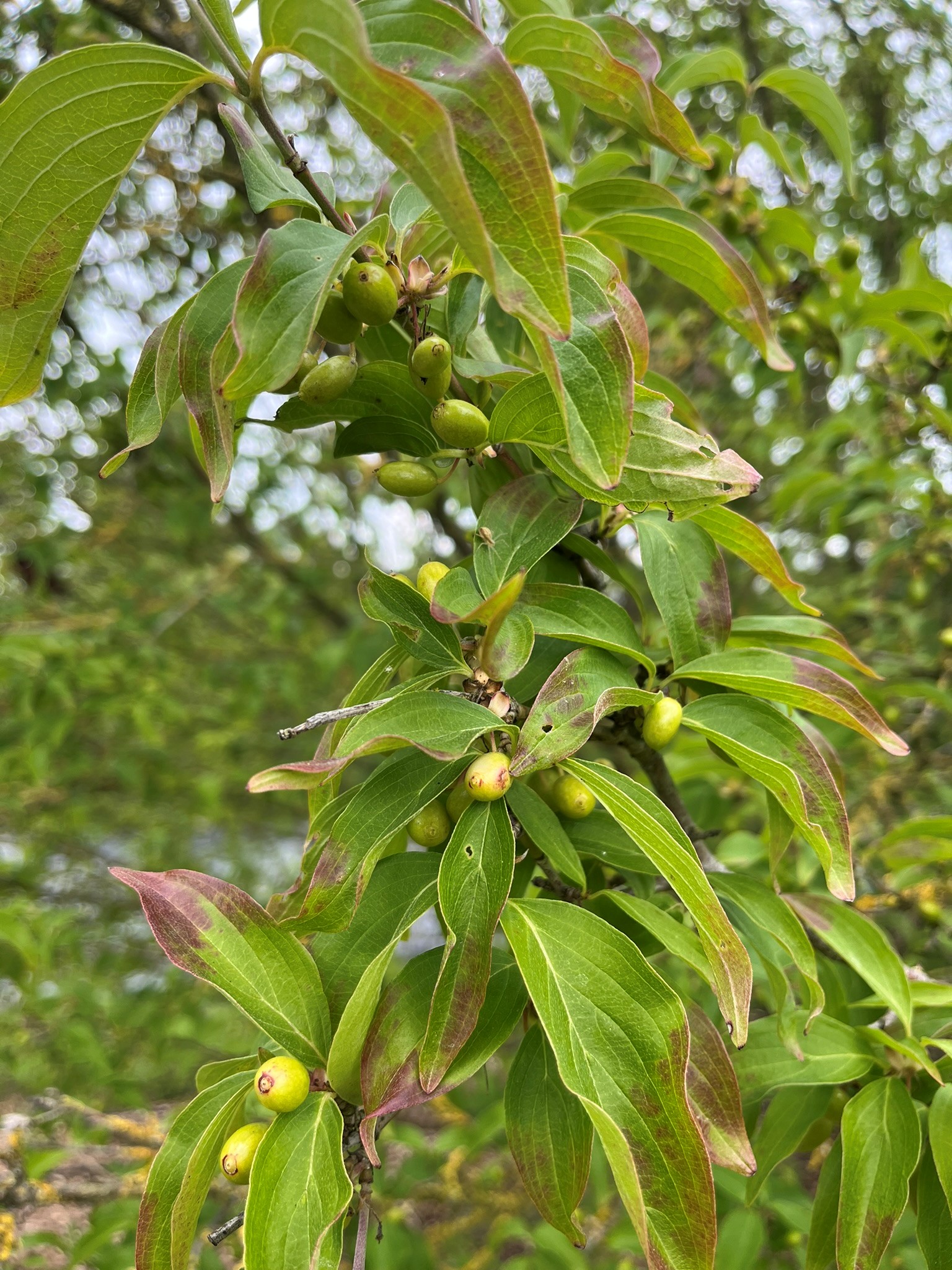
Cornelian cherry is usually seen in gardens and arboretums, where it is prized for its attractive early-flowering yellow blooms, often mistaken for witch hazel. However, Ann Wolfe, co-founder of Wakelyns, was aware that its bountiful, cherry-like red fruit is perfectly edible, high in vitamin C, and produces a well-flavoured jam or other preserve, if the birds don’t get there first!
A native to southern Europe, it is perfectly hardy in this country, tolerant of a range of soil conditions, and requires very little pruning, growing naturally into a large bush-like tree up to about 5m. It is an important source of early nectar for bees, and has attractive autumn colours. It is potentially long-lived, and the bark yields a red dye that has been used to colour Fezzes.