
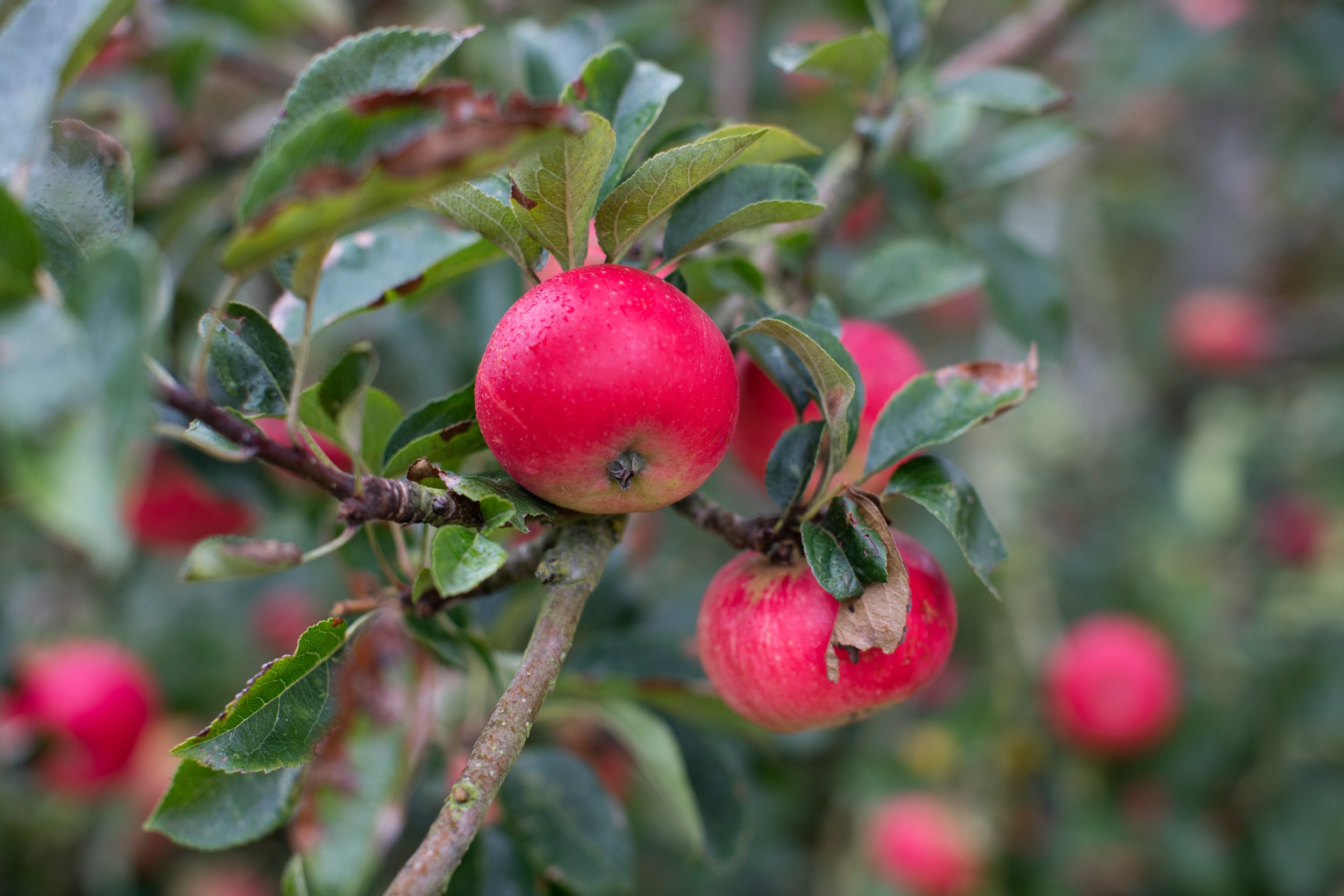
Malus domestica
Height / DBH: Variable depending on rootstock
Carbon Sequestration: 15 kg/CO2e/year
Habitat Value: High value, especially for foliage, invertebrates, leaf litter, pollen, nectar and fruits.
Preferred Conditions: All soils apart from poorly drained or shallow. Full sun. Low tolerance to frost, wind, drought, and flooding.
Apples have been eaten since Prehistoric times, when only crab apples existed in Britain. The cultivated apples we eat today originated from the Tien Shan mountains between China and Kazakhstan. Today there are approximately 2,300 varieties of dessert and cooking apples grown in Britain, plus hundreds of cider apple varieties, mainly grown in the West Country.
Of all the species of fruit trees planted at Wakelyns, the apple varieties are probably the most complex and interesting. Ann Wolfe chose a mixture of common and obscure varieties. The former include Discovery, Jonathan, and Russet, the latter include Cornish Gilliflower, Bloody Ploughmans, and Coeur de Boeuf. Interestingly, she chose to plant most in the ‘Timber Hardwoods’ field, interspersed with the mix of eight hardwood species.
In general, the health of all the apple trees is extremely good, with a relatively low incidence of pest damage and disease. They regularly produce high volume crops which are used for cooking and eating raw. The recent purchase of a commercial fruit press and pulping machine has enabled apple juice and potentially cider production at scale. Autumn Apple days allow visitors to sample the diverse harvest and learn more about the 50 or so large apple trees on the fields.
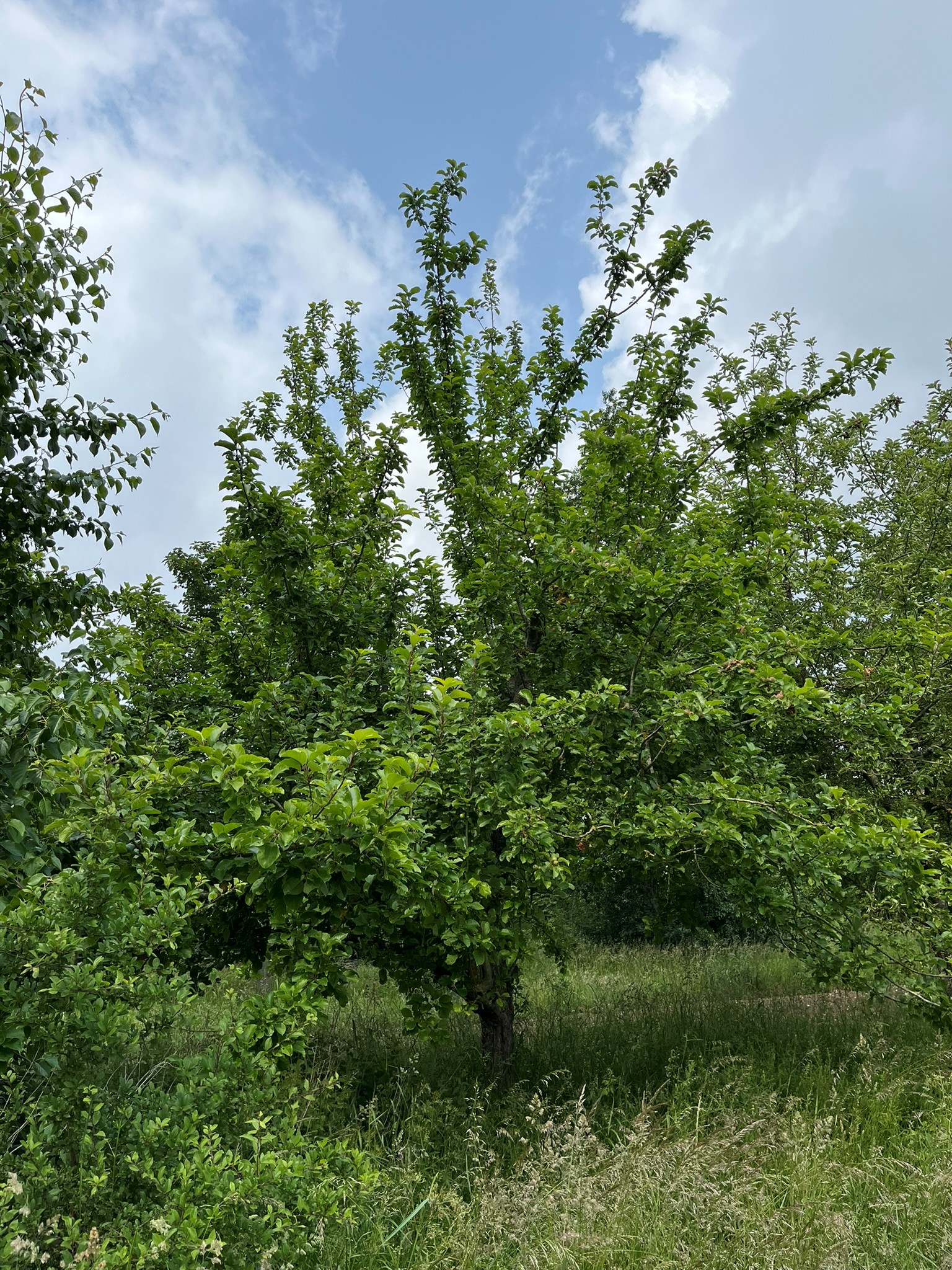
Most of the varieties are growing on the MM106 root stock and have reached a semi mature height of 5m or less in the fruit field and 6m or more in the case of those interspersed with the hardwood trees, a striking difference. All trees have been formatively pruned to produce a goblet shaped crown, although some have a less open structure than others. Maintenance pruning has been mainly directed at remedial work to repair damage from either over-weighting of fruit or occasional mechanical collision. Most have not been reduced in height. However, an attempt was made years ago to lower the canopies of some of the tallest growing apples. This resulted in extremely vigorous regrowth leading to top heavy crowns with excessive shading. This in turn necessitated further pruning to thin the thick regrowth to allow more light into to the lower canopy. Needless to say, this experiment was not repeated.