
Prunus domestica
Height / DBH: Variable depending on rootstock
Carbon Sequestration: 7 kg/CO2e/year
Habitat Value: Moderate value. High value for leaf litter, pollen, nectar, and fruits.
Preferred Conditions: Sand or clay, free draining soils. Full sun. Sensitive to wind and waterlogging.
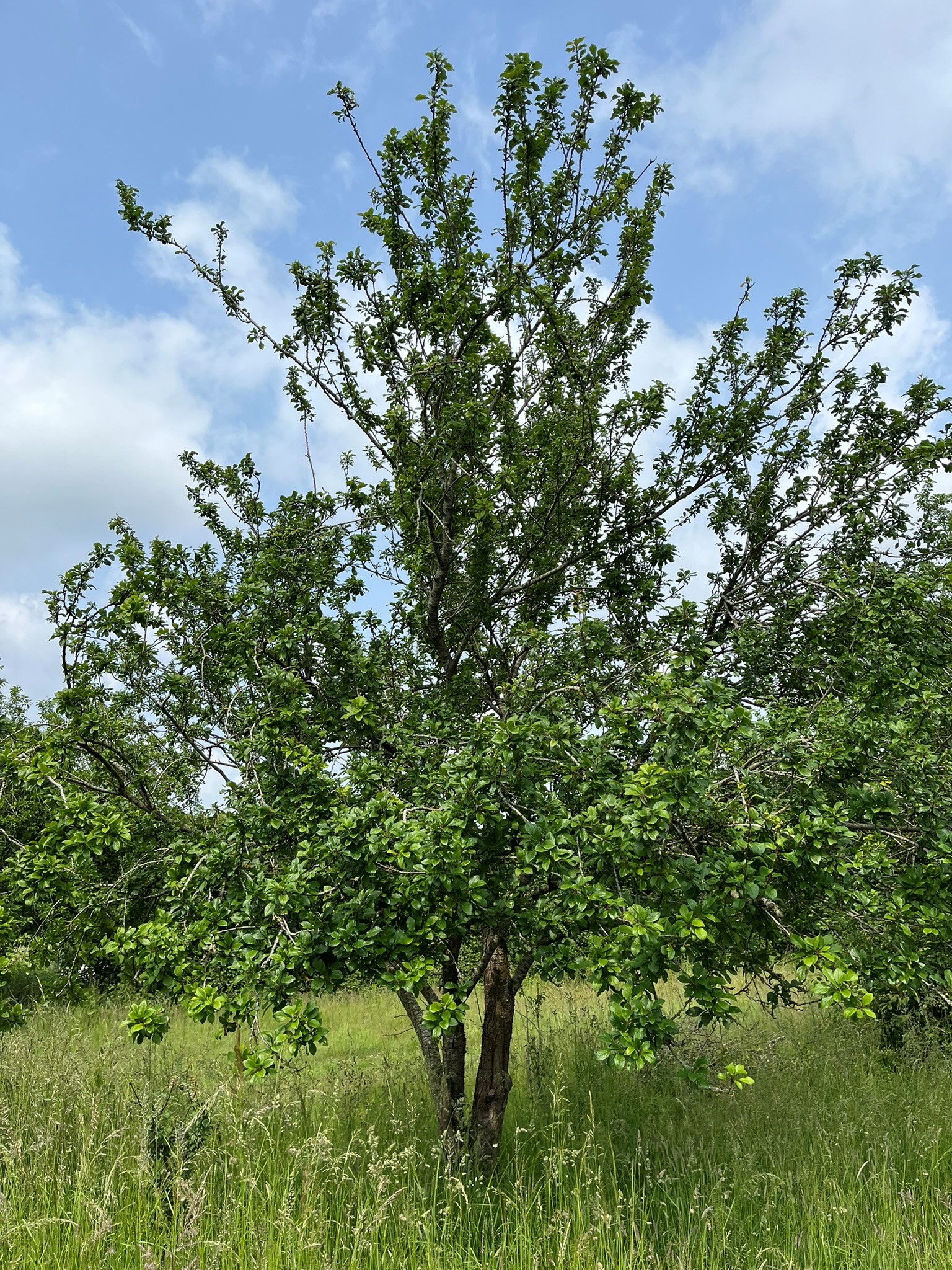
There are many plum trees at Wakelyns, both planted, named varieties, and a larger number of wild suckers originating from the rootstocks of the grafted trees. All the trees seem to thrive on the rich heavy clay and produce large crops every year.
Plums are amongst the earliest cultivated fruits, originating from the Japanese plum (Prunus salicina) found in China several thousand years ago. Plum stones have been found in Neolithic archaeological sites in Europe, suggesting very early domestication of the fruit. Indeed, dried plums (prunes) were discovered in Egyptian tombs of the Bronze Age. Today there are hundreds of plum varieties, of which over 20 can be found growing at Wakelyns. The crop is a valuable part of the food produced at the farm, both in fresh form and also dried.
The management of plum trees is challenging, especially in an agroforestry setting. The suckering from the rootstocks is almost impossible to prevent and takes a disproportionate amount of time and effort to control compared to other non-suckering fruit trees. Whether organic or not, herbicide use is not recommended, as the sucker growth is directly connected to the root system of the parent tree. Brush-cutting is the only practical solution, but this merely increases the number of stems produced year on year.
In addition, the pruning of all stone fruit, particularly plums, needs to be planned carefully. Only summer pruning is recommended, in order to reduce the risk of disease ingress through wounds (Prunus species produce gum containing anti-fungal properties to help seal wounds when in growth). Even then, the size of pruning cuts should be kept to a minimum. As cultivated plums often produce heavy crops towards the end of fairly brittle thin branches, care needs to be taken to reduce end-weighting to avoid fracturing.
As well as the plums growing in the Fruit Field, there is an interesting second area of planting where they are interspersed with different varieties of Walnut. This seems to suit both species of trees and conveniently, walnuts are best pruned in late summer, so the operation can be completed in tandem. It is noticeable that the varieties of greengage seem to grow particularly well and require less maintenance than the other varieties.