
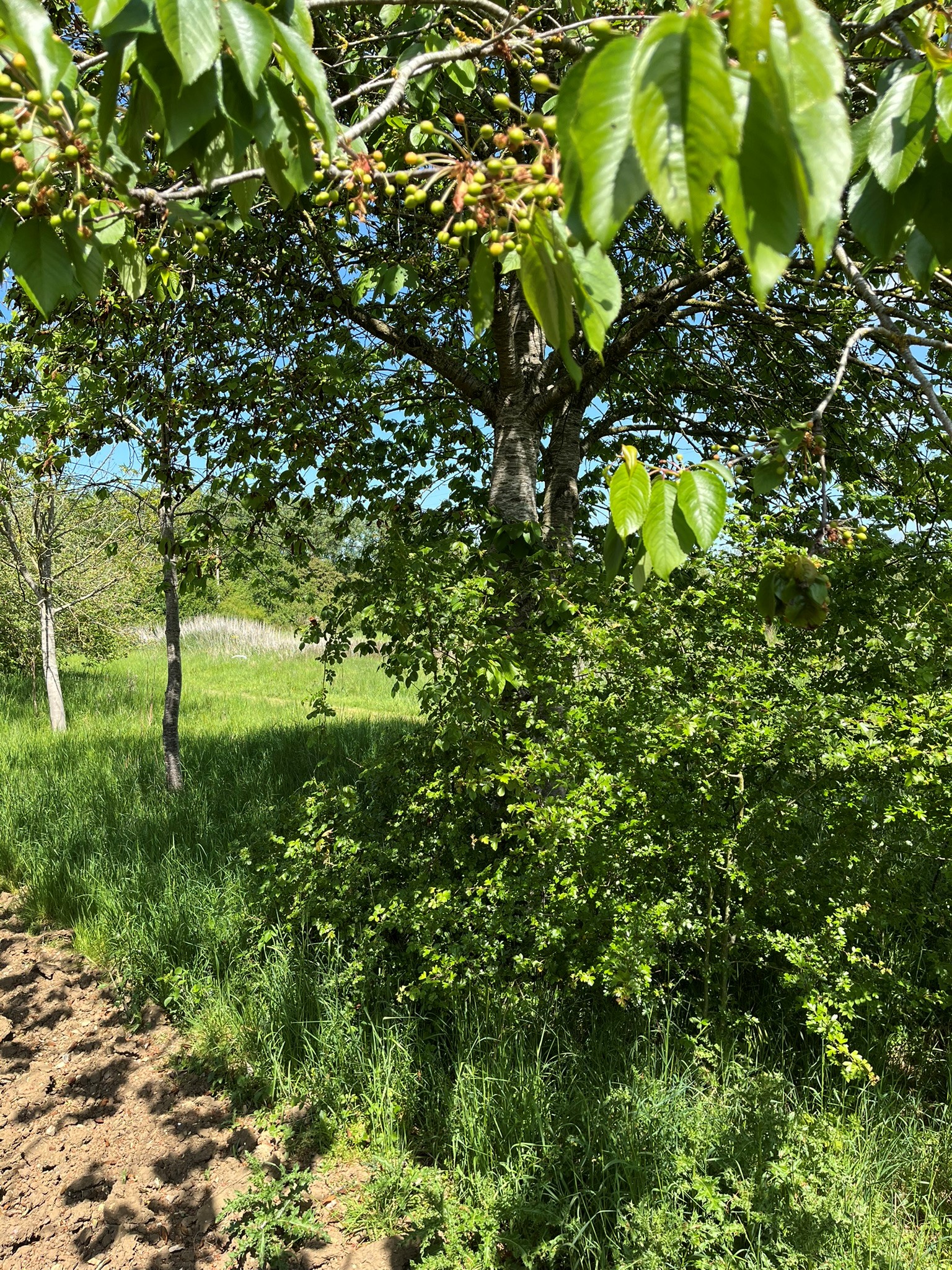
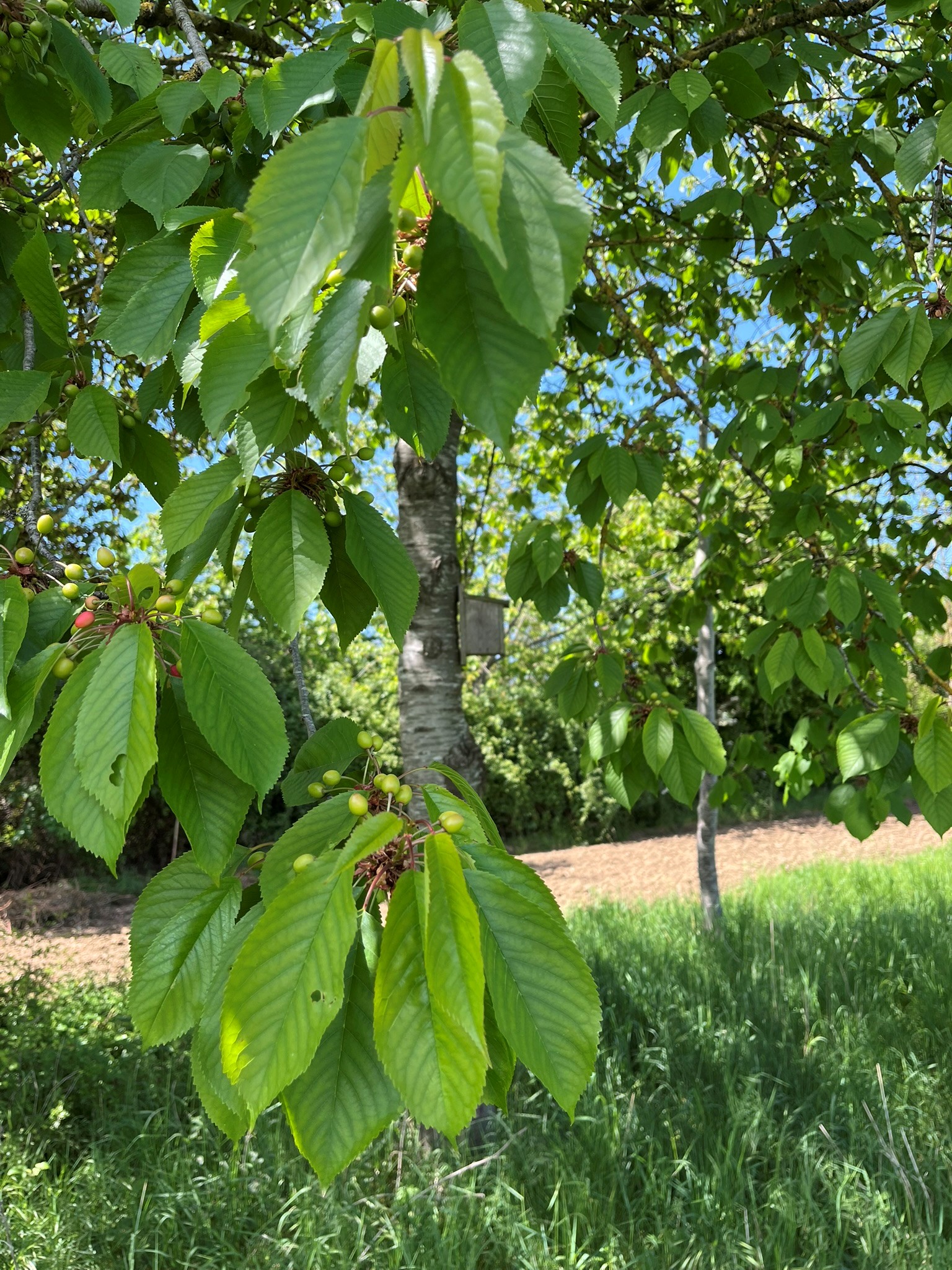
Prunus avium
Height / DBH: 25-32m / 0.5-0.7m
Carbon Sequestration: 10 kg/CO2e/year
Habitat Value: Moderate value. High value for fruits and seeds.
Preferred Conditions: Well drained, moist soils. Not shade tolerant. Not exposure tolerant.
The story of these wild cherries planted amongst the other species of hardwoods in this field is a curious one. Although they were ordered and supplied as Britain’s native wild cherry (Prunus avium), they were not quite what they seemed.
There are two types of native cherry. The smaller, usually more shrub-like, is Prunus padus, the bird cherry. Although this bears fruit, which the birds devour rapidly, the cherries contain a level of cyanide which makes them dangerous for human consumption. The wild cherry, Prunus avium, (sometimes called gean or, confusingly, also bird cherry), grows potentially to 25m, with beautiful deep red heartwood, valuable for timber production. This was the reason it was chosen to be planted here, instead of among the fruit tree collection. The cherries Prunus avium produces are relatively small compared to domestic cherry varieties. They turn yellow to red and the resident birds move in to consume them.
The wild cherries at Wakelyns grew well except for a few subject to flooding in wet winters. Here, they perished after ten years or so as cherries generally dislike water-logged soil.
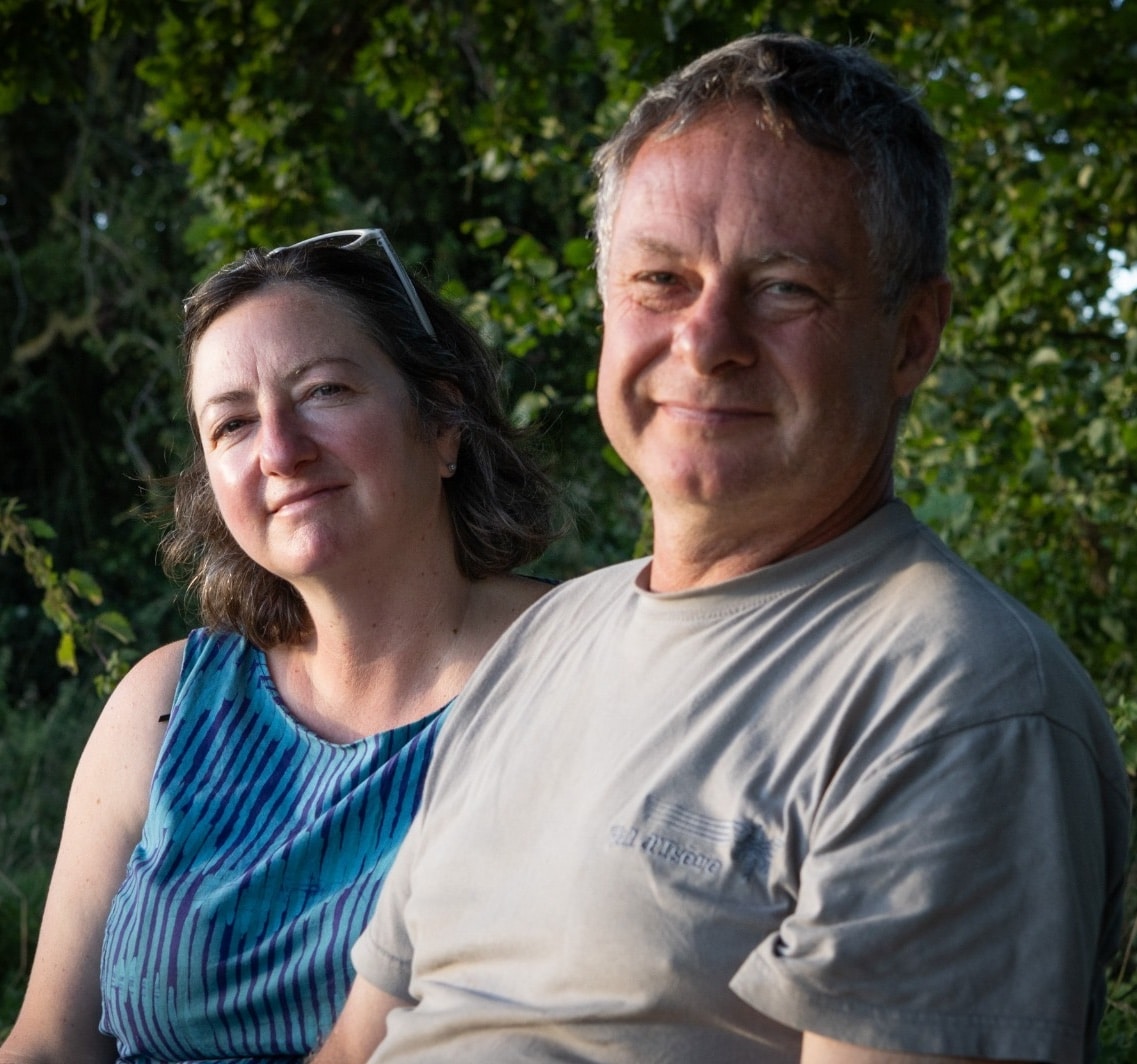
The trees began fruiting after 5-7 years, and Martin and Ann Wolfe were intrigued to discover that the fruit were almost as large as domestic cherries, black and sweet to taste when ripe! After a bit of research, they concluded that, although technically Prunus avium, the trees were almost certainly grown from seed gathered in eastern Europe, probably Poland, where the indigenous wild cherry produces the larger, sweeter fruit.
Up to this point, the management of these trees had been identical to the other hardwoods, namely, lifting canopies progressively to form clean trunks, up to at least 5m, and subsequently the thinning out of specimens deemed less suitable for future timber production. However, once the ‘mistake’ was reviewed, the decision was made to treat all the remaining Prunus avium as fruit producers, and no further thinning or pollarding was followed. The trees have since fruited reliably every year, and the fruit has been harvested and relished. The trees have even increased in number due to frequent suckering from the roots. In future, as the cherries become older and produce less fruit, they can still be harvested for potential timber, probably in the next 30 years.