
Acer pseudoplatanus
Carbon Sequestration: 15 kg/CO2e/year
Habitat Value: High value, especially for foliage invertebrates, leaf litter, and epiphytes
Preferred Conditions: Deep, moist, fertile soils. Shade tolerant. Moderate exposure tolerance.
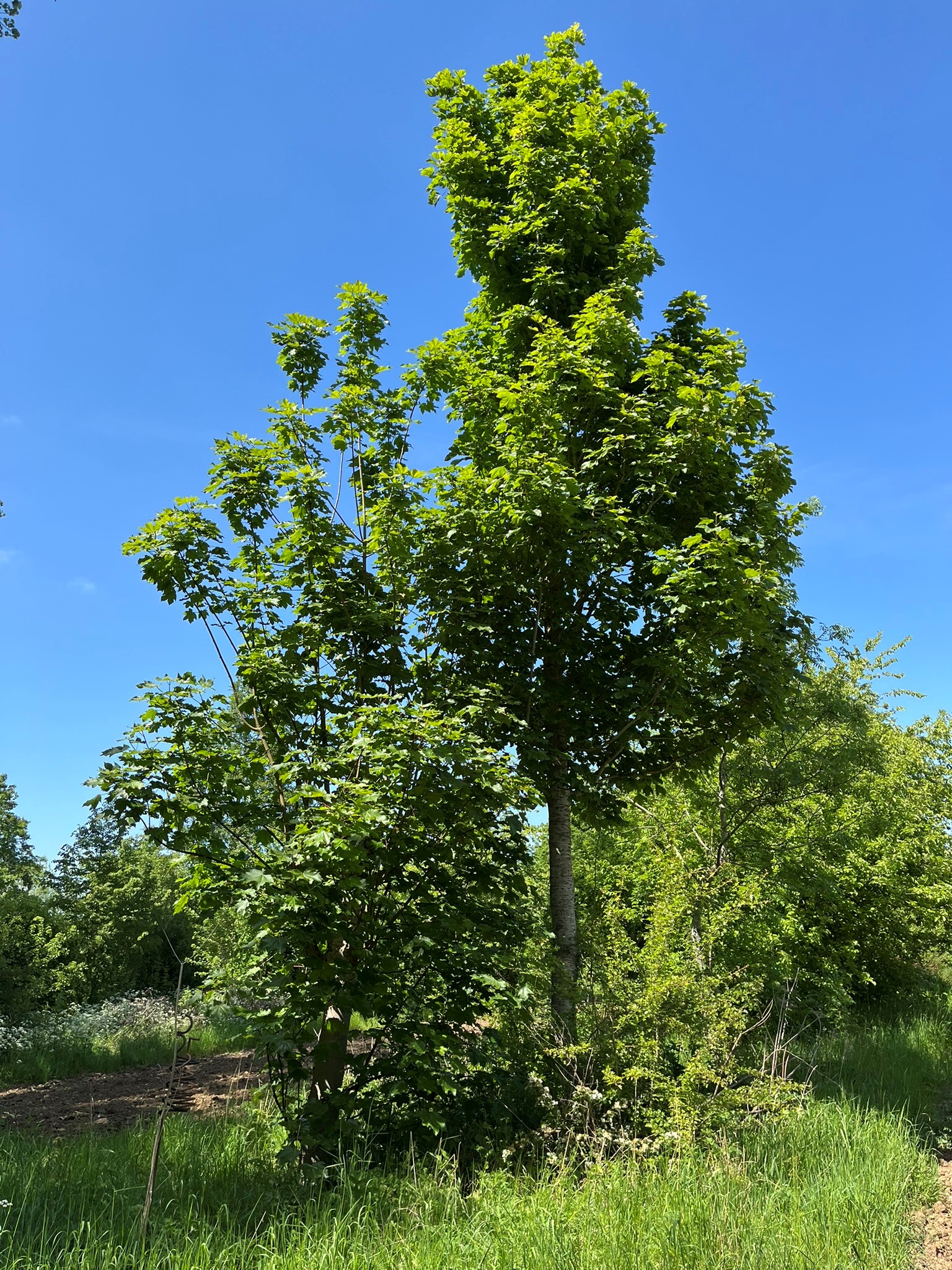
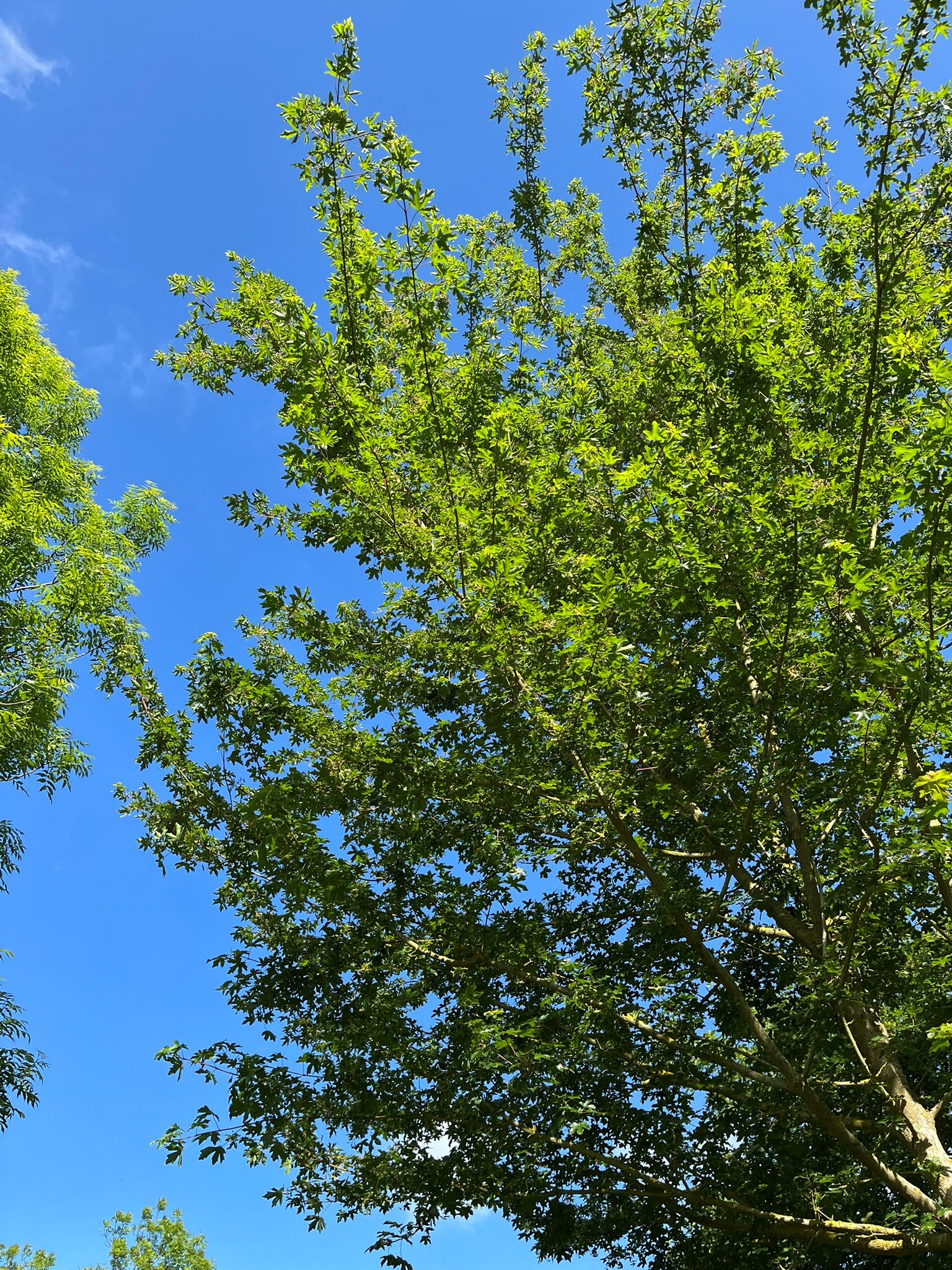
This pair of sycamores, planted in 1994, will be familiar to most people. Native to central Europe and western Asia, the species was introduced to Britain at least 500 years ago and has become naturalised and common since. It is a member of the Acer family, with relatives including Norway maple and field maple, the palmate, lobed leaves being distinctive of this genus.
Many visitors to Wakelyns are surprised to see pairs of sycamores among the nine species planted in 1994/5 and originally intended as future timber-bearing trees. It is often considered an unwelcome alien in native woodland as its reputation for prolific self-seeding has resulted in its derogatory nickname ‘the weed tree’. However, at Wakelyns, the sycamores produce very few off-spring, almost certainly due to the competition from a thick sward and numerous other self-seeding trees such as ash. Even in agroforestry schemes on light soils, where the self-seeding could cause problems, regular coppicing or pollarding on a 5-7 year basis would dramatically reduce the seed crop.
The growth forms of these two trees show a clear difference between an unmanaged standard and a pollarded tree. I have been very impressed by the response to pollarding of this species. It produces modest numbers of regrowth shoots, but the rate of growth is probably faster than any other pollarded tree. This factor, coupled with the straightness of new stems, makes it an ideal species for a 5-7 year rotation, yielding large quantities of easily harvested fast-drying wood fuel, which is either chipped, or logged as cordwood. The timber potential of unpollarded sycamores is also favourable. The trunks increase in girth steadily, and there is still a market for good quality sycamore timber for use as worktops, furniture frames, and occasionally, veneer.
The canopies can support huge numbers of aphids, which are an important food source for many small birds. One drawback to this species is its toxicity to several mammals, especially horses. However, this can be an advantage when coppiced, as deer and rabbits tend to avoid browsing the regrowth. Another useful property of the sycamore is its resistance to both wind and salt-spray, which is why it is useful for creating protective windbreaks.